Babylon University’s Ph.D. Dissertation on Analysis & Prediction of Gene Regulatory Networks Using Graphical Neural Networks
News of Universities
110
18-06-2026
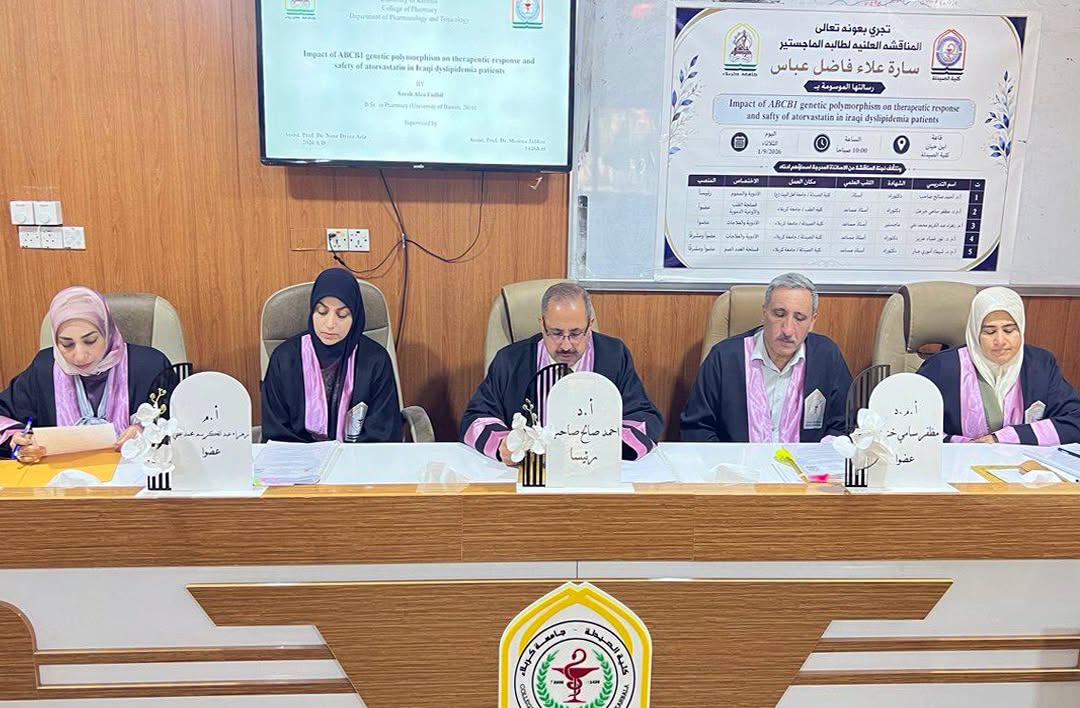
The College of Information Technology, University of Babylon discussed a Ph.D. dissertation the analysis and prediction of gene regulatory networks (GRNs) using graphical neural networks by the postgraduate student, Ms. Sara Ibrahim Mohammed.
The dissertation uncovered the underlying regulatory relationships between genes and improved the accuracy of reconstructing gene regulatory networks in data-limited environments, as well as enhancing the ability to predict previously undiscovered biologically significant connections.
The dissertation highlighted gene regulatory networks as one of the most important models used to understand the regulatory relationships between genes and their impact on complex biological processes within living organisms.
The dissertation reviewed an innovative hybrid model called CGDCA-DiGAT, which integrates multiple information sources to improve the prediction performance of regulatory relationships within dispersed gene networks.
The dissertation highlighted E. coli and S. cerevisiae data showed that the proposed model outperformed a number of the latest methods used in this field, achieving an AUC value of 96% for E. coli data and 87% for S. cerevisiae data, which confirms its high efficiency and reliability in analyzing complex genetic networks and improving the accuracy of predicting regulatory relationships.